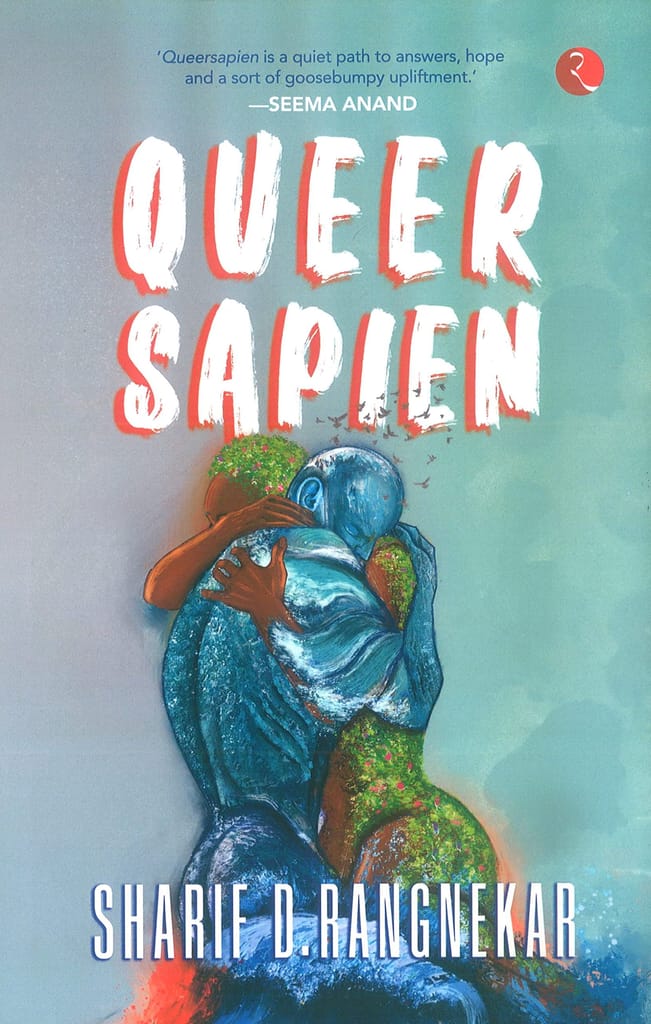
Is queer ‘only’ about sexuality? Or is it a state of existence?
In its truest form, nature is queer and queer is free. Nature is queer when water takes the form of
oceans,akes, rivers, rain, snow, steam, dew and every other avatar it chooses and expresses itself
through. It’s queer when the soil takes the shape of a hill or a mountain or a ravine. Queer is when
one tree doesn’t force another tree to become its clone, and every flower finds a place under the
sun. Queernessies in the consciousness that ifeft free, everyone becomes more rooted in their
existence and stronger in their individuality.
Queersapien is neither an individual’s search for identity, nor is it aamentation of societal prejudices.
The book recognizes the fact that there are many ways toive. A queer mind sees itself as part of
the extreme diversity nature offers. It is, therefore, aware that if we shed the veneers we wear and the blinkers we viewife with, we’d know there isn’t a solitary kind of food or form to clothing,
history, education and wisdom. There isn’t a singular structure to a family, a union or one way to
love or one normal.
In what is a searing and raw reflection onife, media, neoliberalism, politics and the inner self,
Sharif D. Rangnekar, who identifies as a gay man, explores throughived experiences, the meanings
ofove, freedom, identity and dignity in a society where family, religion, caste and class dictate how
weive ourives every day. This is a book that can’t be put in a thematic box, muchike queerness.
Becoming queersapien is not a revolution but an evolution of the self, a nation and its people.